Everything the storm will do to your trees, done on purpose in May
Thin the canopies so the wind goes through, take the weight off the roof and the cage, clean the coconuts and royals, and remove the dead pines and Australian pines now — on a calm morning, at a normal price.
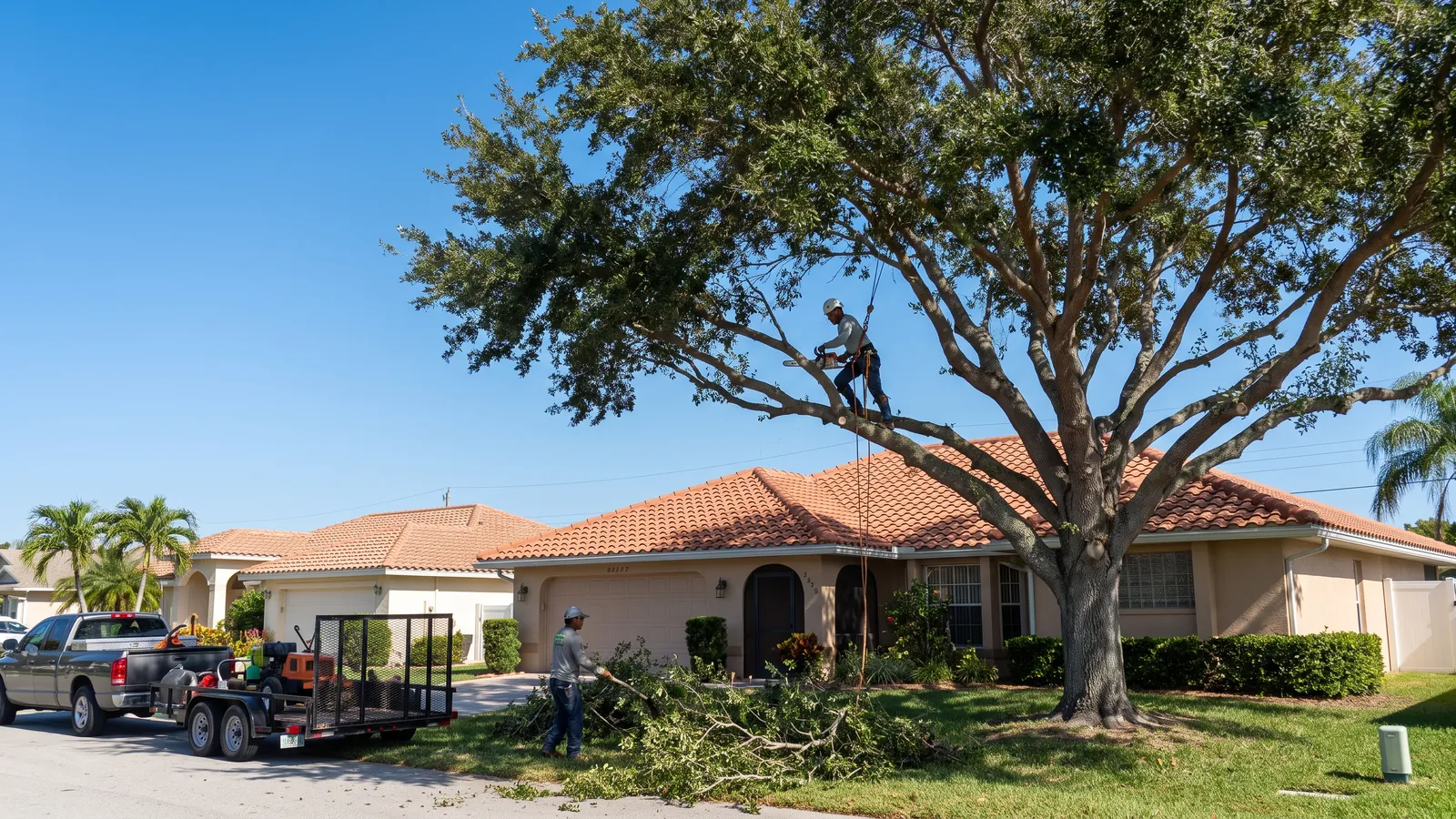
Every tree on a Cape Coral lot is going to be pruned this year. The only question is whether we do it in April with a bucket truck and a written price, or a hurricane does it in September and drops the pieces on the lanai. Hurricane prep is the deliberate version: the dead wood that would become projectiles comes out, the dense crowns of the ficus and black olives are thinned so wind passes through instead of pushing on them like a sail, the limbs over the roof and the pool cage are reduced, the royal palms lose their heavy fronds and the coconuts lose their nuts, and the trees that are going to fail anyway — the beetle-killed pines, the Australian pines on the seawall, the rotting Ganoderma palms — are removed before they fall.
The record says what works. In Charley, Wilma, Irma, Ian and Milton the same trees failed every time in Lee County: Australian pines and melaleuca first, then over-topped and lion-tailed ficus and black olives, then rocked slash pines, then over-pruned "hurricane cut" palms that snapped at the bud. Native live oaks, sabal palms, gumbo limbo and properly thinned mahoganies came through. University of Florida's post-storm surveys found the same thing after every one. So prep is not about cutting everything short — that makes it worse. It's about thinning, reducing and removing the right trees, and doing it between February and May so the cuts close before the season.
What's included
Canopy thinning
Interior thinning of ficus, black olive, mahogany and oaks so wind passes through; never topping.
Weight off the roof and cage
Limbs over the house, the lanai and the pool cage reduced back to a strong lateral.
Palm cleaning
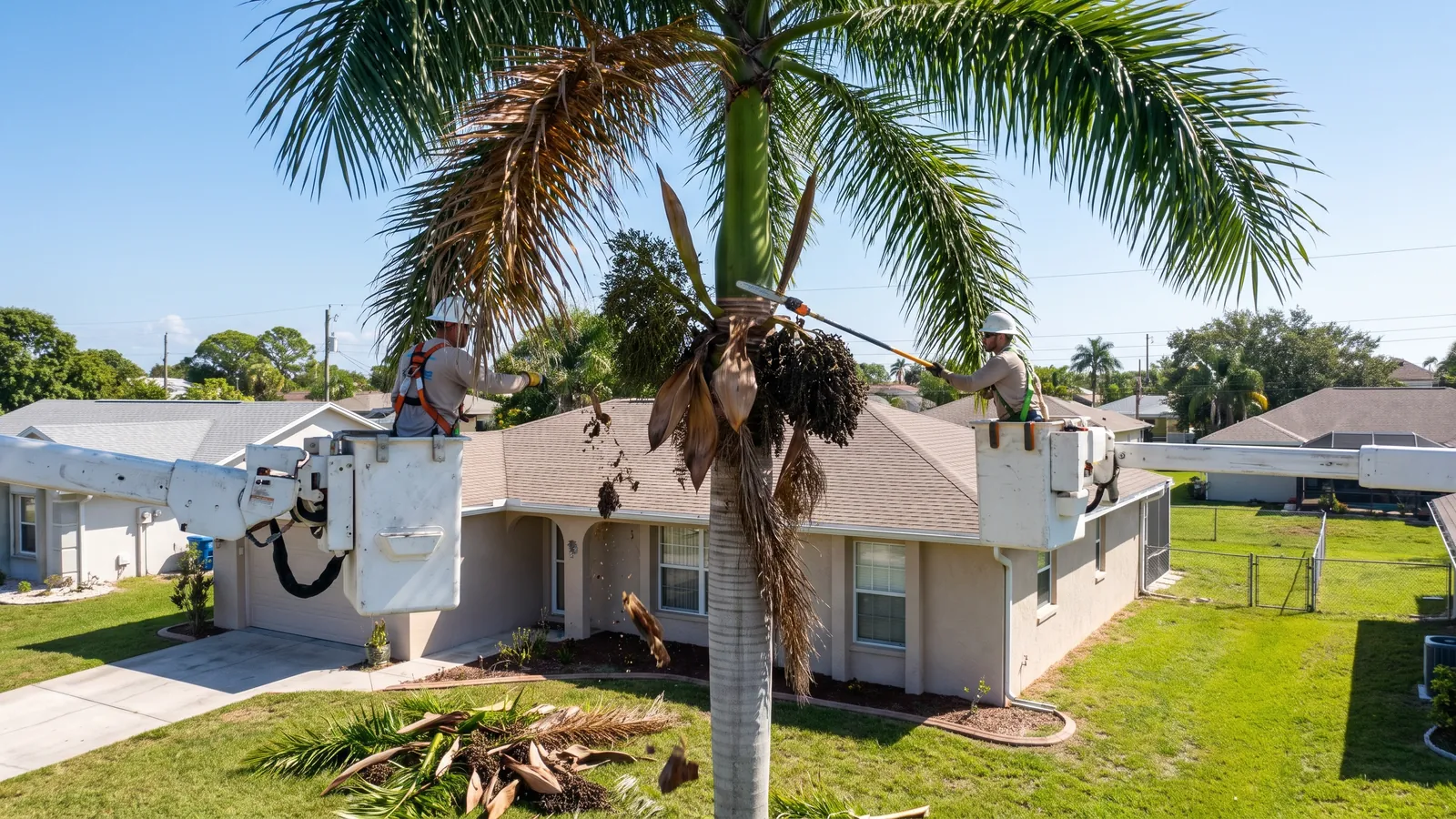
Royals, coconuts and queens cleaned of heavy fronds, seed stalks and nuts — green fronds left.
The removals
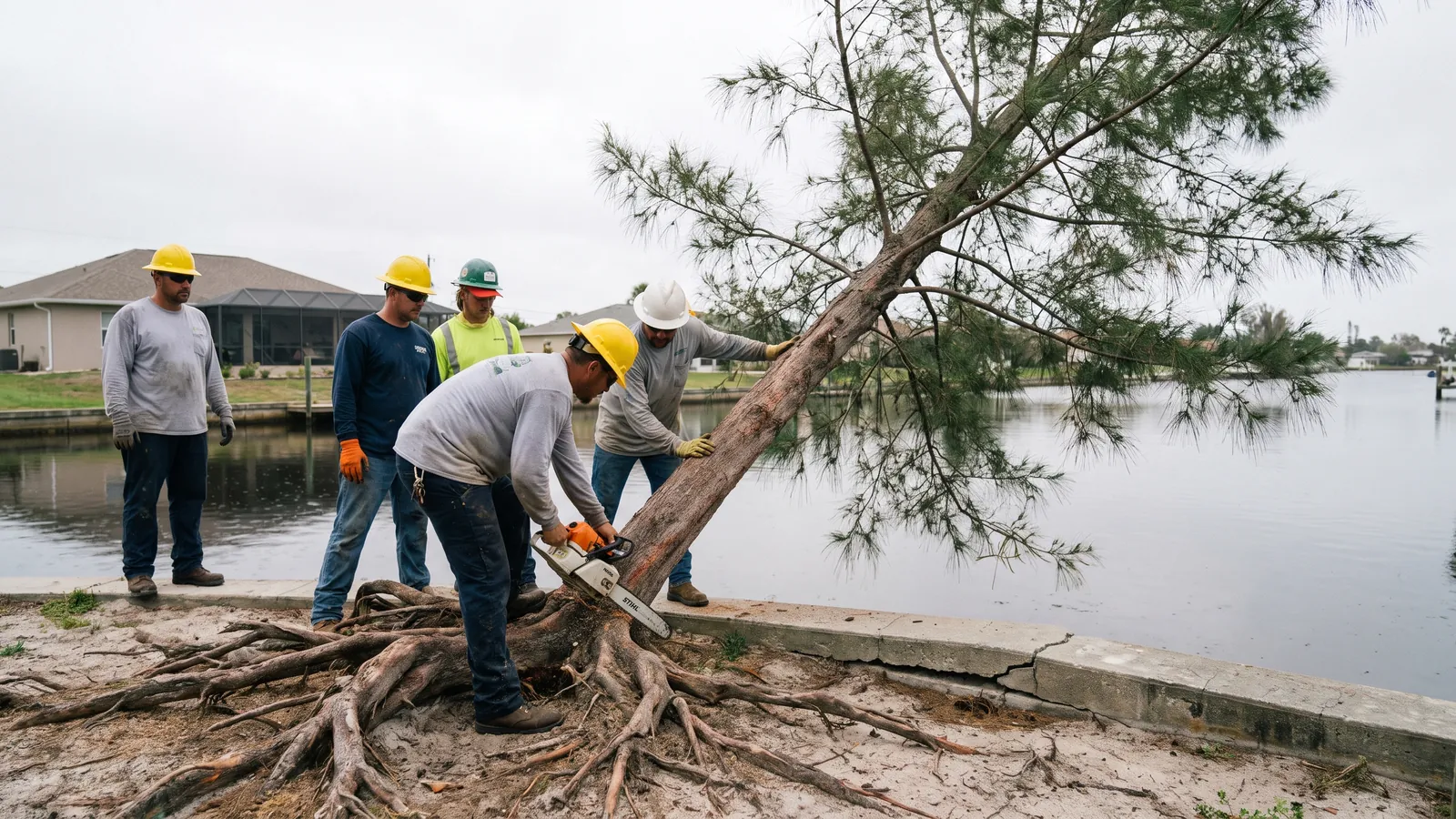
Dead pines, Australian pines, diseased palms and anything with a hollow or a crack gets taken down now.
Service-drop clearance
Limbs within reach of the LCEC drop cleared so the first gust doesn't take your power.
A written plan
Which trees we thinned, which we recommend removing, which are fine — in writing, with photos.
Hurricane tree prep cost in Cape Coral, FL
| Job | Typical price | Notes |
|---|---|---|
| Hurricane prep visit, typical lot | $600 – $1,800 | Two to four trees thinned and cleaned, palms done |
| Thinning, large shade tree | $400 – $1,200 | Per tree; ficus, black olive, mahogany, oak |
| Palm cleaning, per palm | $60 – $400 | Queens cheapest, royals most |
| Dead pine or Australian pine removal | $600 – $3,500 | See the removal pages |
| Whole-lot storm plan with removals | $2,500 – $8,000 | Canal lots with multiple big trees |
| Post-storm cleanup (for comparison) | $1,500 – $8,000+ | Same trees, after the fact, at emergency rates |
These are 2026 Lee County ranges so you can budget. Your written price is itemized — the climb or bucket work, rigging, chipping and haul-off, stump grinding, crane time, the wildlife and mangrove check — and good for 30 days.
Recent work
Questions we get about hurricane tree prep
When should I schedule hurricane prep in Cape Coral?
February through May. The season starts June 1, the serious part is August through October, and pruning cuts need a few months to close. We're booked solid by June, and after a named storm the queue is weeks long at emergency prices.
Should my palms get a hurricane cut?
No. The 'hurricane cut' — stripping every frond above horizontal — makes palms weaker, not safer. Clean the dead fronds, pods and nuts and leave the crown. Over-pruned palms snapped at the bud across the south Cape in Ian; full-crowned sabals and royals bent and stood.
Which trees should I just remove before the season?
Australian pines anywhere near a structure or the water, dead or declining slash pines, Ganoderma or lethal-bronzing palms, melaleuca, any tree with a crack or a hollow at the base, and over-topped ficus that have regrown a mop of weakly attached sprouts. Everything else can usually be thinned and kept.
Does trimming really make a difference at 140 mph?
At the center of a Category 4 eyewall, not much survives. But most of a hurricane's footprint is 60 to 100 mph, and at those speeds a thinned tree stands and a dense, over-weighted one goes over. Ian's damage across the Cape was overwhelmingly the same few species and the same pruning mistakes.
Can you do my whole street?
Yes — a group of canal-front neighbors scheduling together gets the bucket truck and the crane for a day at a better rate than one lot at a time. Ask us about a street visit in March.