Australian pines on a seawall are a roof waiting to happen
Seventy to ninety feet tall on roots a foot deep, on the city's prohibited-vegetation list, and down by the thousand in Charley and Ian — we take Australian pines, melaleuca, Brazilian pepper and the rest of the list out on your schedule, not the storm's.
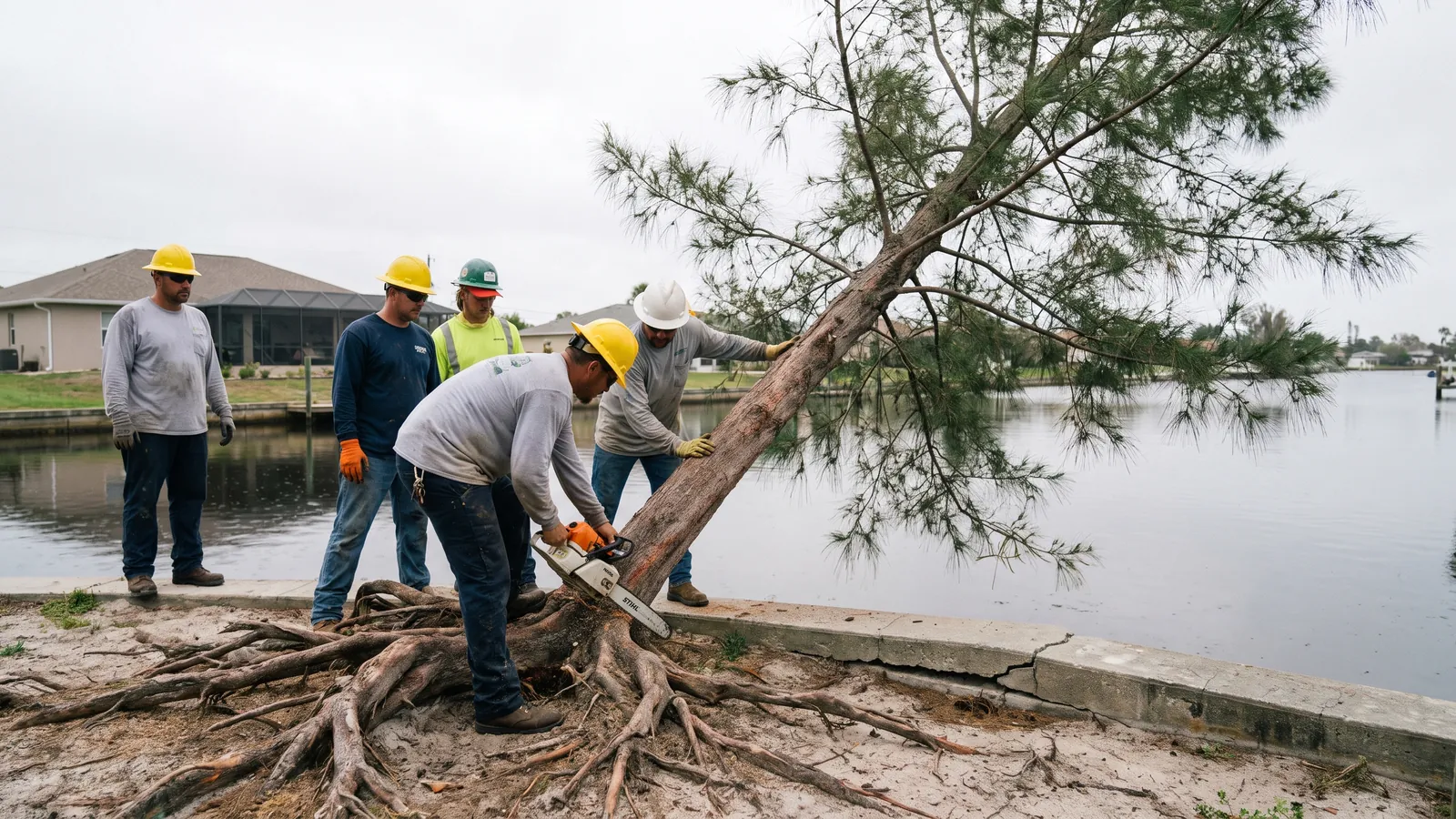
Cape Coral's Land Development Code keeps a list of prohibited plants that every lot has to be cleared of before a certificate of occupancy and kept free of "in perpetuity": Australian pine, melaleuca, Brazilian pepper, earleaf acacia, carrotwood, bishopwood, woman's tongue, java plum, Chinese tallow, Cuban laurel fig as a tree, and more. The ones that matter on a residential lot are the first three. Australian pines were planted all over the south Cape in the 1960s as fast windbreaks and canal-edge screens; they're now seventy to ninety feet tall on a root system that spreads wide and shallow in the fill, and they are the tree most likely to be lying across a house after a hurricane. Charley flattened them in 2004, Ian did it again in 2022, and the ones still standing are the ones that haven't had their storm yet.
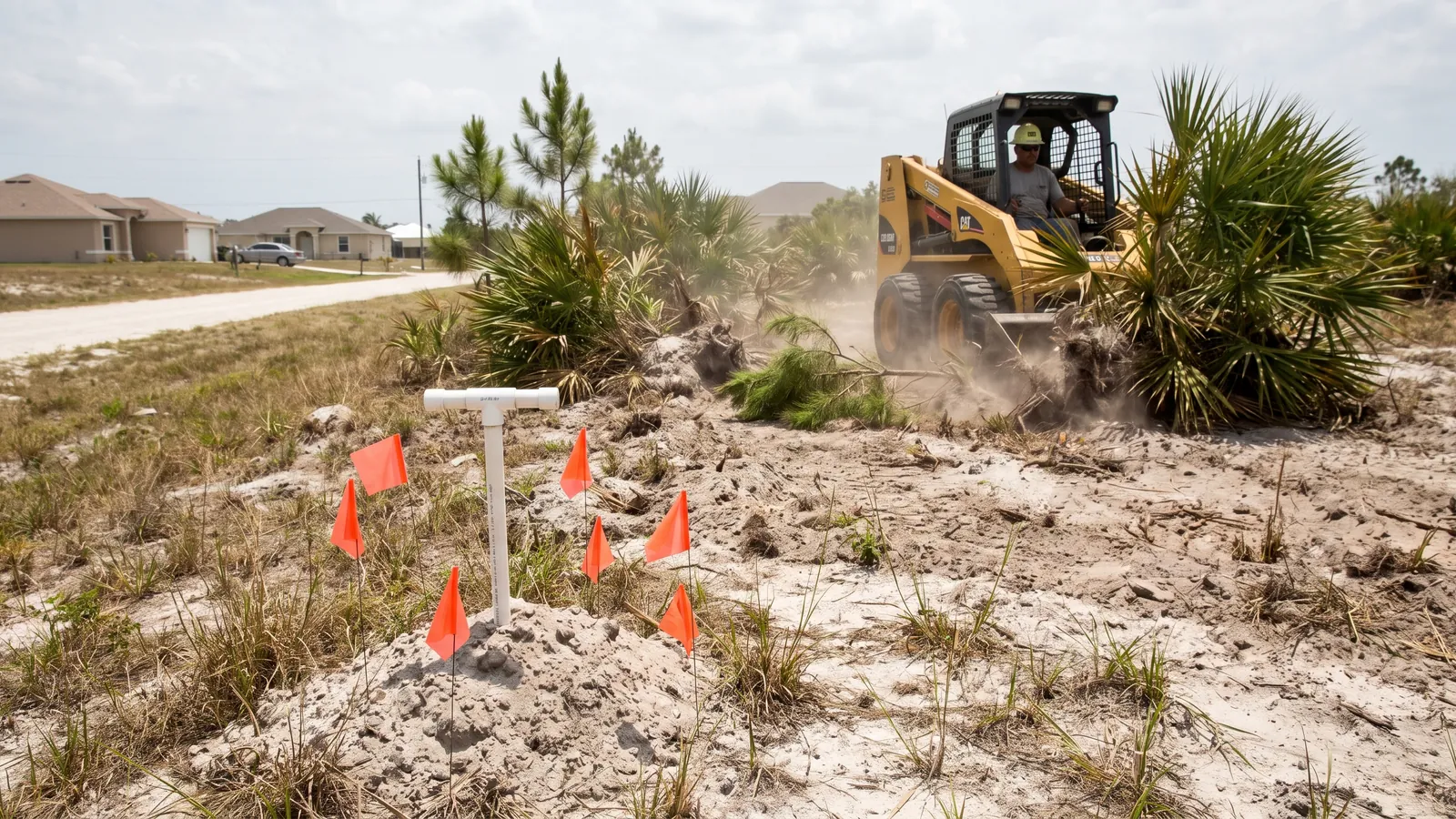
Melaleuca is the paperbark tree that was planted to dry out the Everglades and now seeds itself across every wet North Cape lot; it burns like a torch and shrugs off cutting unless the stump is treated. Brazilian pepper is the red-berried shrub-tree that swallows canal banks, fence lines and vacant lots, and it's on the state noxious-weed list. None of them need a city permit to remove on your lot, Lee County charges no fee for exotic removal permits where one applies, and the county, the city and the state all want them gone. The work is in the doing: Australian pines near the water come down in sections over the seawall with nothing in the canal, melaleuca stumps get a cut-stump herbicide so they don't resprout, and Brazilian pepper is grubbed out by the root.
What's included
Species identified
Australian pine, melaleuca, Brazilian pepper, earleaf acacia, carrotwood, bishopwood and the rest of the city's list, told apart from the natives that look like them.
Sectioned over the water
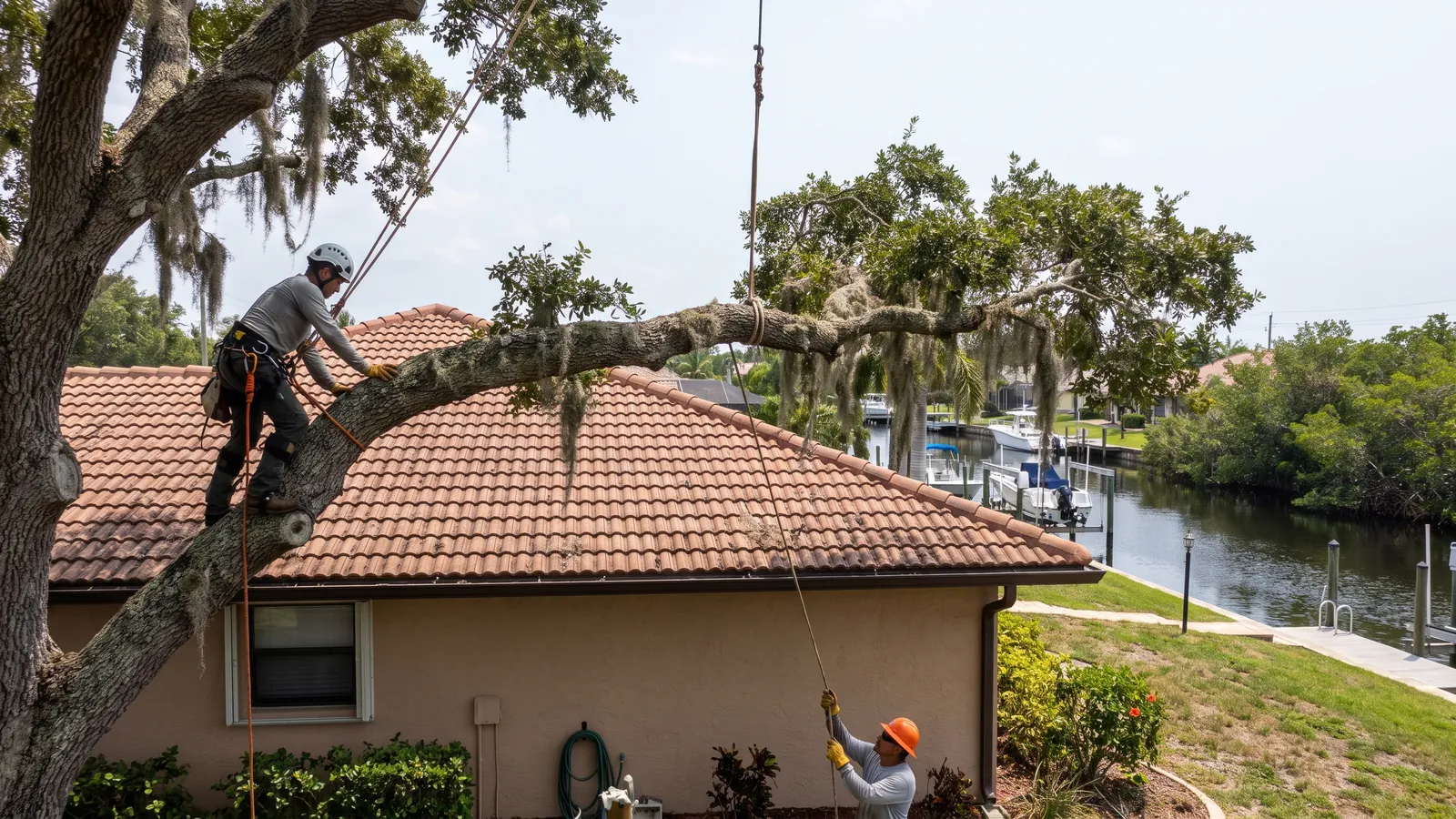
Canal-edge Australian pines roped down in pieces or craned over the roof; nothing goes in the canal or on the seawall cap.
Stumps treated
Melaleuca and Brazilian pepper stumps cut-stump treated or grubbed so they don't come back.
No permit on your lot
Cape Coral requires none; Lee County's exotic removal permit, where it applies, carries no fee and we file it.
Mangroves left alone
Red, black and white mangroves along the canal are state-protected natives, not invasives — we refer them to a Professional Mangrove Trimmer.
Hauled, every piece
Invasive debris is hauled and disposed of, never left to reseed the lot.
Invasive tree removal cost in Cape Coral, FL
| Job | Typical price | Notes |
|---|---|---|
| Australian pine, 40–60 ft, open lot | $600 – $1,500 | Felled and chipped |
| Australian pine, 60–90 ft, canal lot | $1,500 – $3,500 | Sectioned over the seawall; crane on tight lots |
| Row of Australian pines | $800 – $2,500 each | Common windbreak rows along the south Cape canals |
| Melaleuca, per tree | $300 – $1,200 | Includes cut-stump treatment |
| Brazilian pepper clearing | $500 – $3,000 | Per lot edge or fence line, grubbed out |
| Lot-wide exotic clearing | $1,500 – $6,000 | Full vacant lot, with wildlife check |
These are 2026 Lee County ranges so you can budget. Your written price is itemized — the climb or bucket work, rigging, chipping and haul-off, stump grinding, crane time, the wildlife and mangrove check — and good for 30 days.
Recent work
Questions we get about invasive tree removal
Do I have to remove the Australian pines on my lot?
The city requires a lot to be free of prohibited vegetation at its certificate of occupancy and kept that way, and code compliance can cite an overgrown lot. In practice nobody is coming to count your pines — but your insurer may ask, and the next hurricane will settle the question for you. The tallest tree on a canal lot with the shallowest roots is the one that goes through the roof.
Why are Australian pines so dangerous in a hurricane?
They grow to ninety feet on a root plate that spreads wide and shallow in Cape Coral's sandy fill, they hold a dense crown that catches wind, and they have brittle wood. In Charley and Ian they went over in rows along the canals, taking seawalls, docks, screen cages and roofs with them.
Can you tell a native from an invasive?
Yes, and it matters. Australian pine isn't a pine (it's a casuarina with needle-like branchlets); slash pine is native and worth keeping. Brazilian pepper looks like holly; dahoon holly and wax myrtle are natives. Melaleuca is the white papery-barked one; the similar-looking bottlebrush is a harmless ornamental.
What about the mangroves along my canal?
Those are protected natives, not invasives, and state law regulates trimming them. Above ten feet the work has to be done by a registered Professional Mangrove Trimmer, and the fines for getting it wrong are per tree. We don't trim mangroves; we'll refer you to someone who can legally.
Will the melaleuca grow back?
If the stump isn't treated, yes — vigorously. We apply a cut-stump herbicide within minutes of the cut, and for Brazilian pepper we grub the root crown out, which is the only reliable way to stop it.